

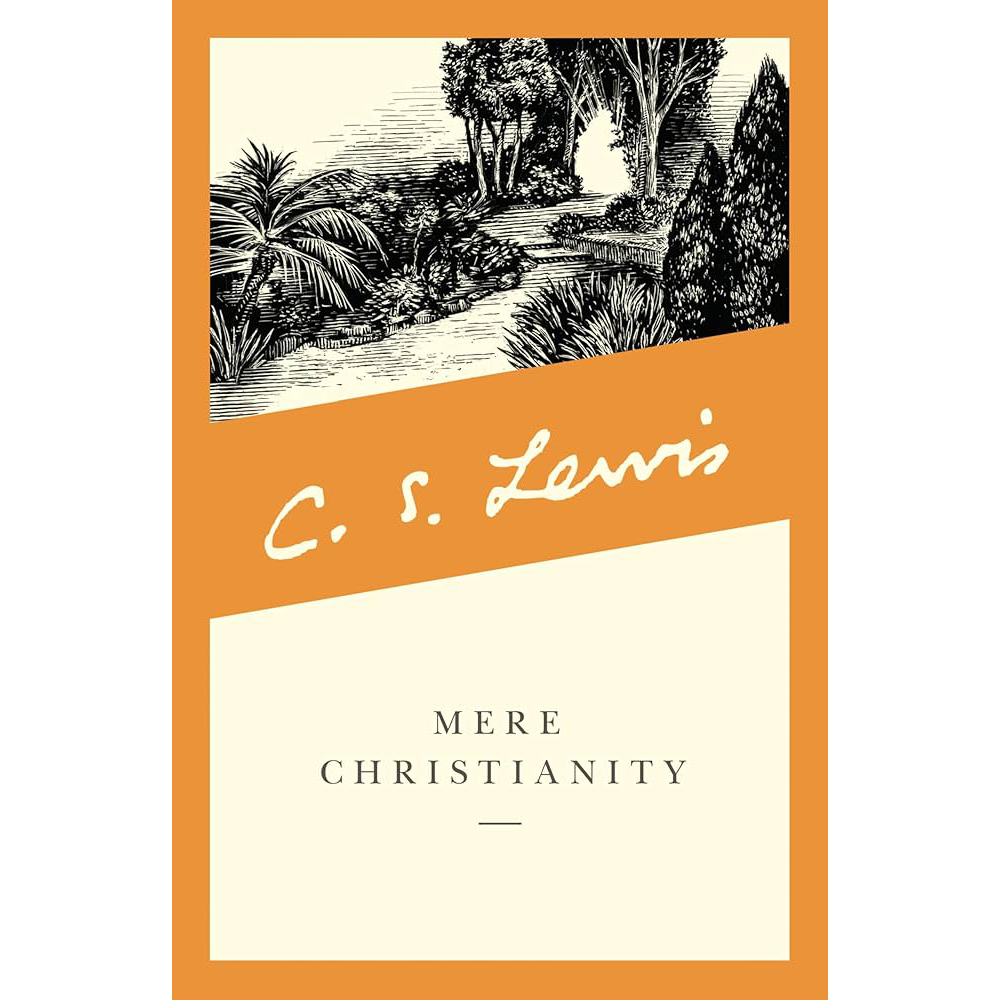
C.S. Lewis’ attempt to disprove the existence of God that brings him to the opposite conclusion.
Lewis begins his book with an explanation of a thing that appears to be in all, but the outliers of humanity. He contends that we all, regardless of the culture we come from, have an innate understanding of certain things that are right and wrong. Perhaps we can call it a conscience. We know that certain things are just right and others are just wrong. Sure, we are brought up and taught certain things by our parents, but Lewis contends that these things would be in us and have been in us, regardless. He uses for example, an empty seat in a public place. We are all pretty accepting that if a seat is occupied by someone before we arrive at it, we do not have a right to it. The person that got there first does. We may be upset that we missed out on the seat, but we hold no ill will to the current seat holder. He got there first. Everyone seems to recognize some basic universal laws of morality. This built-in morality is God. Anyone can choose to ignore this morality, but that does not negate it. The wrongdoer knows he has deviated from it.
Lewis contends that we can deviate from this morality if we choose, because he has given us free-will. Without this free-will, we would all be perfect. We would also not be individuals. We are all dealt a different hand when we are born. We can be tall, or short, a particular race, or a mixture of races, we can be rich or poor or somewhere in between. We can be born with a physical malady or deformity. We can be born physically beautiful. Lewis contends that someone who is born with many gifts has to work harder to earn his place. For example, it is likely easier for someone who is born rich and beautiful to have a good temperament. This person can live a life where basic necessities are not an issue and people you interact with tend to treat you better. Someone with below-average looks and born into poverty has to work much harder to keep a good temperament. God weighs this sort of thing in his judgement.
Lewis contends that God made the world, but he is no more a part of it than a painter is part of his painting. He had to take human form to become part of it. This human form was Jesus. He existed and endured crucifixion in order that we too could become sons of God as we were in the Garden of Eden before temptation derailed us.
In order to be accepted, we must fully give ourselves to God. There can be no half-effort. One must fully surrender. One outcome of this will be that you discover your true self. Most people walk around with a portrayal of some personality that is not really a representation of one’s true self. Fully surrendering yourself to God will reveal this true self and allow you to fulfil the purpose of your life.
This was a wonderfully well-written book. It is a very easy read and you will definitely find yourself evaluating the concepts presented in your own way. It is also very thought-provoking, as any good book, film, or any other good work of art should be.