
Coming soon…


blog
Coming soon…
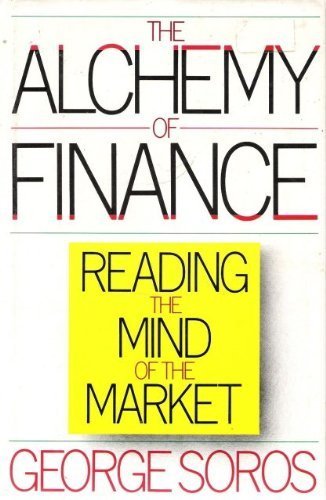
George Soros is famous for breaking the bank of England in 1992. He felt that the British Sterling was overvalued vs the German Mark and French Franc. Through his investment firm, The Quantum Fund, he borrowed £9 billion, placing £1 billion of his own collateral to secure the loan. They then converted the £10 billion to German Marks and French Francs. This caused the British Sterling to lose 15% in value, at which point, Soros and the Quantum fund bought back the Sterling at the reduced rate and basically profited approximately £1 billion on £10 billion British Sterling in a matter of days. The Bank of England lost somewhere in the neighborhood £3.3 billion in that timeframe trying buy the Quantum Fund’s dumped funds and ran out of foreign reserves. Prior to this, British politicians dictated economic policy and interest rate, since then, economic experts do. It also prompted the British government from opting out of the EU and the Euro and ultimately led to Brexit.
This book was published about five years prior to this event. The book consists of roughly 30% about his rationale for making his investment decisions from August, 1985 until a market crash in October 1987. This 30% is written almost like a financial diary, with charts, market conditions, and his interpretations of them as he tries to apply his concept of reflexivity to predicting currency, bond, and stock prices.
Reflexivity, as Soros argues, and I tend to agree with is an economic concept that brings reality to the supply and demand curve. Soros argues that the economic concept of the market seeking equilibrium and that it is always right is false in the real world. His belief, and mine, is that the market has a large percentage of emotional and less-than-perfectly informed participants. He says that the most basic economic concepts, such as the supply vs. demand curve presupposes that all participants are fully aware of all the facts of the market and behave logically given those facts. In a modern economy, no one is fully aware of all the variables at play, and even if someone were, emotion would still play a part in their decision making process. That’s just a fact of being human. In a nutshell, Soros’ concept of reflexivity implies that the market will not seek equilibrium and it will not behave predictably. Even at his level of success, Soros admits to being caught off guard many times when the market behaves in a manner that he did not expect. In the journaling portion of this book, Soros attempts to deduce the reasoning for the market behaving in a way that he did not anticipate. He then tries to apply this to future events. He does this constantly, changing his strategy along the way, all the while looking for patterns in that correlate events with data points through charts and graphs. He diversifies so that as long he is right a decent percentage more than he is wrong, his fund is making money.
Given that this book was written in the 1980’s, the graphs and charts are not as colorful and intuitive as someone could probably make nowadays with little effort, Excel, and a few AI queries, but in the 1980’s I imagine this was fairly cutting-edge. Because of this, the middle 30% of the book can be mostly skipped. Once you read a chapter or two of how Mr. Soros reacted to certain events, you get the gist of it. Going through two years of events from 50 years ago will probably not be very applicable to today’s market. Too much has changed and the events will never align perfectly. Reflexivity, however, will still apply.
With regards to reflexivity in the current market versus how the market worked in the 1980’s, the biggest difference, in my mind, is the fact that a large percentage of Americans buy stock at regular intervals, regardless of market conditions, through their 401k accounts. In the past, people would generally invest based on perceived market conditions, not on intervals. We are also entering a period where the first generation of Americans with 401k’s are beginning to withdraw, rather than continue to add to the market, as they begin to retire. I am not sure that anyone is certain how the next 20-30 years is going to play out. Things are not as simple as supply and demand.